Six things worth knowing before you pick a boat
- Four quays, not one. Rådhusbrygge 2, 3 and 4 stand in a row in front of the City Hall. The most-reviewed cruise of the six, at 4.5 from about 6,690 reviews, leaves from none of them: it goes from Langkaia, by the Opera House, about a kilometre east and roughly a quarter of an hour on foot. The piers, sorted out.
- Fifty minutes at one end, six hours at the other. The short wooden-ship loop from Rådhusbrygge 3 is a taster rather than a fjord trip. The six-hour trip lands on five islands and walks them — it is not wheelchair accessible, it involves walking and climbing, under-15s must be accompanied, and it carries about 158 reviews against the thousands behind the city cruises. What each length buys.
- One live guide out of six. Only the silent hybrid-electric boat from Rådhusbrygge 2 has a person talking on a city cruise, in English, and it sits at 4.7 from about 2,079 reviews. Everything else is a recording: seven languages through the app on the Langkaia boat, thirteen on the wooden ships’ companion app. Who is actually talking.
- Line B1 runs on a transit ticket. Ruter’s island boat calls at Hovedøya, Lindøya, Gressholmen, Bleikøya and Nakholmen, line B2 adds Langøyene in summer, and B10 crosses to Nesoddtangen in about 23 minutes. No cruise ticket involved. What the ferry does and does not give you.
- The lowest-rated boat is the one with a lift. The 2-hour electric cruise from Rådhusbrygge 4 sits at 4.4 from about 2,396 reviews, the weakest score of the six — which is an ordinary number for a high-volume operation, and it is the only boat here with a lift on board, heated and air-conditioned. Step-free boats, listing by listing.
- Nineteen metres of rock decide the whole fjord. The threshold at Drøbaksundet is only about that deep, along narrows roughly 17 km long and about a kilometre wide, and behind that shallow lip the basins drop to 160 m and change their water slowly. Why the fjord behaves the way it does.
What is on the boat, and what is not on any of them
Drawn from what the six listings state about themselves. Most of the disappointment on an Oslofjord cruise sits in the second column, and almost none of it is about the boat.
Stated as included
- A saloon with windows and heat on the electric ships. The Langkaia cruise runs a panoramic saloon on an electric ship for ninety minutes; the live-guided silent boat from Rådhusbrygge 2 puts two heated saloons under three open decks. Two hours on board, described
- Blankets on the wooden ships, and a heated deck and a bar on the two-hour sailing ship from Rådhusbrygge 3 — which does not promise you a seat. Boarding is open and the advice is to arrive early. Dressing for the open deck
- Commentary you can follow. Seven languages through the app on the Langkaia cruise, thirteen on the wooden ships’ app with English over the speakers, multilingual audio on the electric boat from Rådhusbrygge 4, the lowest-rated of the six, and a live English guide only on the silent boat from Rådhusbrygge 2. What runs in English
- A Bygdøy ferry ticket, bundled into the two-hour wooden sailing ship from Rådhusbrygge 3, the one with no guaranteed seat. It is the only cruise here that hands you a second crossing. Bygdøy from the water
Not included, and not on offer
- The fjords on the postcard. Geirangerfjord and Nærøyfjord are 300 to 450 km away and no boat leaving Oslo goes anywhere near them. The gap, measured
- Oscarsborg and Drøbak. Both are far south down the fjord, past the narrows, and a city cruise does not reach them; only the six-hour island trip — not wheelchair accessible, walking and climbing, under-15s accompanied — or a dedicated Drøbak boat gets near. The fortress that sank the Blücher
- Getting off the boat. Five of the six put you back on the quay you left from without your feet touching an island. The six-hour trip is the exception and it lands five times. Trips that actually stop
- Step-free access on everything. The six-hour island trip says plainly that it is not suitable for wheelchair users, that it involves walking and climbing, and that under-15s must have an adult with them. What each listing states
What goes past the window, in order
Eleven things between the City Hall quays and the near islands, and why each is there.
This is the water five of the six boats work: the Langkaia cruise, the two wooden ships from Rådhusbrygge 3 (the two-hour one promises no seat), the live-guided silent boat from Rådhusbrygge 2 and the electric boat from Rådhusbrygge 4, which is rated lowest of the six. They differ in the pier, the hull, the clock and the voice. The order below is roughly what a boat leaving the City Hall quays meets; the Langkaia cruise starts a kilometre east of it and picks the sequence up from the fortress.
- Akershus Fortress — A medieval castle and fortress standing on the headland that divides the harbour, and the first thing every boat clears. It is also where the wind arrives: the moment you pass it, everybody who chose the open deck finds out at once. What that means for your jacket.
- The Opera House, across Bjørvika — White stone and glass sloping into the water on the far side of the bay. Langkaia, where the most-reviewed cruise of the six leaves from at 4.5 over about 6,690 reviews, is on this side, by the Opera House and Central Station. Walking to the right quay.
- Vippetangen — The quay on the east side of the fortress headland where the Copenhagen ship ties up. Big hull, ordinary working traffic, and a useful reminder that this is a port before it is a view.
- Aker brygge and Tjuvholmen — The rebuilt waterfront west of the City Hall, low and glassy along the water. From a boat you see the whole face of it at once, which you cannot do on foot.
- Filipstad and Hjortnes — Further west, where the Kiel ferry goes out. There has been no Oslo–Frederikshavn crossing since 2020, so Kiel and Copenhagen are the two long routes you will actually see loading.
- Bygdøy — The wooded peninsula opposite, dense with museums, and the green edge of most of these cruises. The two-hour wooden sailing ship from Rådhusbrygge 3 includes a ferry ticket over there; it also has no guaranteed seat. What is on the peninsula.
- Dyna lighthouse — A small lighthouse alone on a skerry in the middle of the inner harbour, and the single most photographed object on this water. Which side of the boat to stand on.
- Hovedøya — The nearest island, and the one the public boat serves on an ordinary Ruter ticket rather than a cruise ticket. Line B1 stops here. The island on its own.
- Lindøya and Nakholmen — Two low islands covered in small painted summer cabins, packed close together. This is the part of the trip that looks least like a capital city and most like somewhere people go in July.
- Gressholmen and Bleikøya — The last of the near islands on the B1 line, and roughly where a ninety-minute cruise turns for home. All five, described.
- Sjursøya — Container cranes on the eastern shore, on the way back in. The fjord that carries the sightseeing boats is also the one carrying the freight, and the boats that show you neither of those things are the short ones.
Nothing on that list is more than a few kilometres from the City Hall, which is the honest shape of this trip: a dense, working, genuinely interesting harbour seen from the water, over ninety minutes or two hours, and then the same quay again. The six-hour island trip is the only one that breaks the pattern, and it breaks it by landing rather than by going further — not wheelchair accessible, walking and climbing on the islands, under-15s accompanied. The route in full, and what ninety minutes covers.
How to choose, and how booking through this site works
Settle the pier before anything else
This is the decision you cannot fix on the day. Five of the six leave from Rådhusbrygge 2, 3 or 4, which stand in a row in front of the City Hall and are a minute apart. The sixth, the most-reviewed cruise in Oslo at 4.5 from about 6,690 reviews, leaves from Langkaia over by the Opera House and Central Station, about a kilometre east. Book that one and walk to the City Hall and you are at the wrong end of the harbour with a boat leaving without you.
Decide whether you want a person or a recording
Exactly one city cruise here has a live guide: the silent hybrid-electric boat from Rådhusbrygge 2, in English only, at 4.7 from about 2,079 reviews. The six-hour island trip also has a live English guide, and is not wheelchair accessible, involves walking and climbing, and takes under-15s only with an adult. The rest hand you audio, and “guided” on a listing page does not mean a human being.
Read the limits rather than the highlights
The two-hour wooden sailing ship from Rådhusbrygge 3 does not guarantee a seat — open boarding, arrive early — and the wooden ships are cancelled and refunded if the fjord ices over. The electric boat from Rådhusbrygge 4 is the lowest-rated of the six at 4.4 from about 2,396 reviews, and is the only one with a lift on board. The fifty-minute wooden loop is a taster and sells itself as one.
Check live dates below
Availability comes straight from GetYourGuide with instant confirmation, and the live figure for what you will be charged appears inside that widget rather than on this page — we print no figures anywhere. We take no bookings and issue no tickets. We are an independent guide, not the operator of any of these boats. What drives one boat higher than another.
Check dates on the cruise with the biggest sample behind it
Oslo: Scenic Fjord Cruise with Audio Guide Commentary sits at 4.5 from about 6,690 reviews, far the largest sample on this water, and it is the one that does not leave from the City Hall quays: it goes from Langkaia, by the Opera House and Central Station, about a kilometre east of Rådhusbrygge 3 and roughly a quarter of an hour on foot. Ninety minutes, an electric ship with a panoramic saloon, audio commentary through an app in seven languages, and no live guide. Our review of this one, including who should book something else.
Three cruises that genuinely differ
Not the three highest scores — three boats that answer different questions. Read every rating with the sample under it: 4.5 standing on about 6,690 reviews and 4.5 standing on about 158 are not the same claim, and the whole field here sits inside a spread too narrow to rank by. All six, side by side, with the quay in the table. The table scrolls sideways on a phone.
| Oslo: Scenic Fjord Cruise with Audio Guide Commentary | The only live guideOslo: Guided Sightseeing Fjord Cruise on Premium Silent Boat | Oslo: The Five Pearls of the Oslofjord Boat Tour | |
|---|---|---|---|
| Leaves from | Langkaia, by the Opera House and Central Station — not the City Hall quays, about a kilometre east | Rådhusbrygge 2, in front of the City Hall | The Rådhusbrygge 4 area, the island boats’ quay |
| Rating and the sample under it | 4.5 from about 6,690 reviews — the biggest sample in Oslo | 4.7 from about 2,079 reviews | 4.5 from about 158 reviews — a small sample, read it as such |
| How long | 90 minutes | 2 hours | 6 hours |
| Who is talking | Audio app, seven languages. Nobody on board is commenting | A live guide, in English only — the only one on a city cruise here | A live guide, in English |
| The boat | Electric ship with a panoramic saloon | Hybrid-electric silent boat, three open decks over two heated saloons | A boat that lands, five times |
| Do you get off? | No. Same quay, ninety minutes later | No | Yes — five islands, on foot |
| Accessibility | Wheelchair accessible | Wheelchair accessible | Not wheelchair accessible. Walking and climbing on the islands, and under-15s must be accompanied |
| Book it if | You have ninety minutes, you want a window and warmth, and your language is one of the seven | You want somebody answering questions rather than a recording, and you have two hours | You want to stand on the islands rather than photograph them, and six hours of walking suits you |
| The thing to check | That you are walking to Langkaia, not to the City Hall | That English-only commentary works for everyone in your party | That every person coming can manage the climbs, and that 158 reviews is a sample you are comfortable with |
| View → | Book this → | View → |
Photo Gallery
Nine frames from the inner fjord
Nine things I would point at from the rail, in roughly the order a boat leaving the City Hall meets them. Tap any of them to open it full size.
One boat from each of the four quays
The Langkaia cruise, 4.5 from about 6,690 reviews, leaving from the Opera House side rather than the City Hall. The silent boat from Rådhusbrygge 2, 4.7 from about 2,079, and the only live guide on a city cruise here. The two-hour wooden sailing ship from Rådhusbrygge 3, 4.5 from about 6,150, which promises no seat. And the electric boat from Rådhusbrygge 4, 4.4 from about 2,396, the lowest-rated of the six and the only one with a lift. The cards carry a duration where a figure would normally sit, because nothing here is quoted in figures. All six, grouped by what they actually are, or which one is best, answered properly.
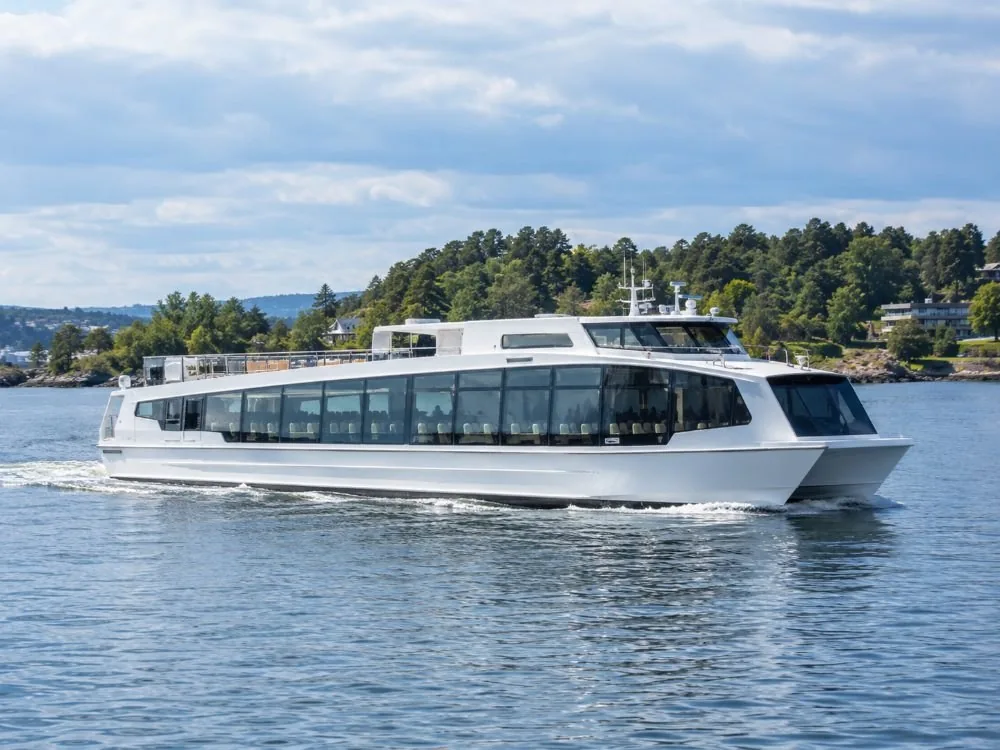 Leaves from Langkaia
Oslo: Scenic Fjord Cruise with Audio Guide Commentary
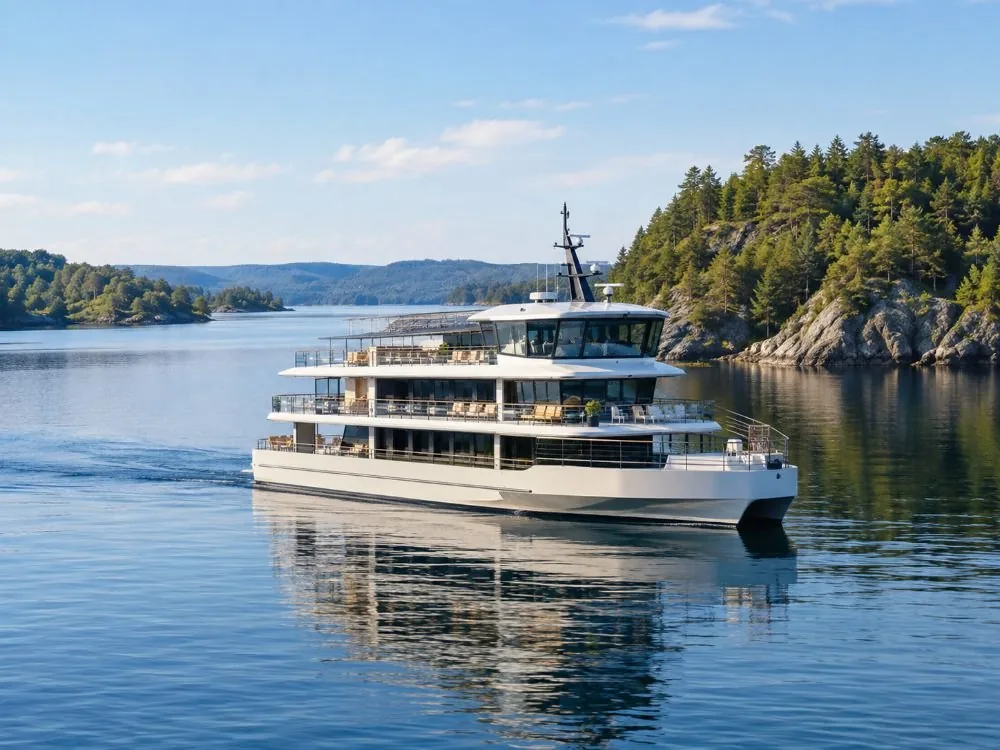 The only live guide
Oslo: Guided Sightseeing Fjord Cruise on Premium Silent Boat
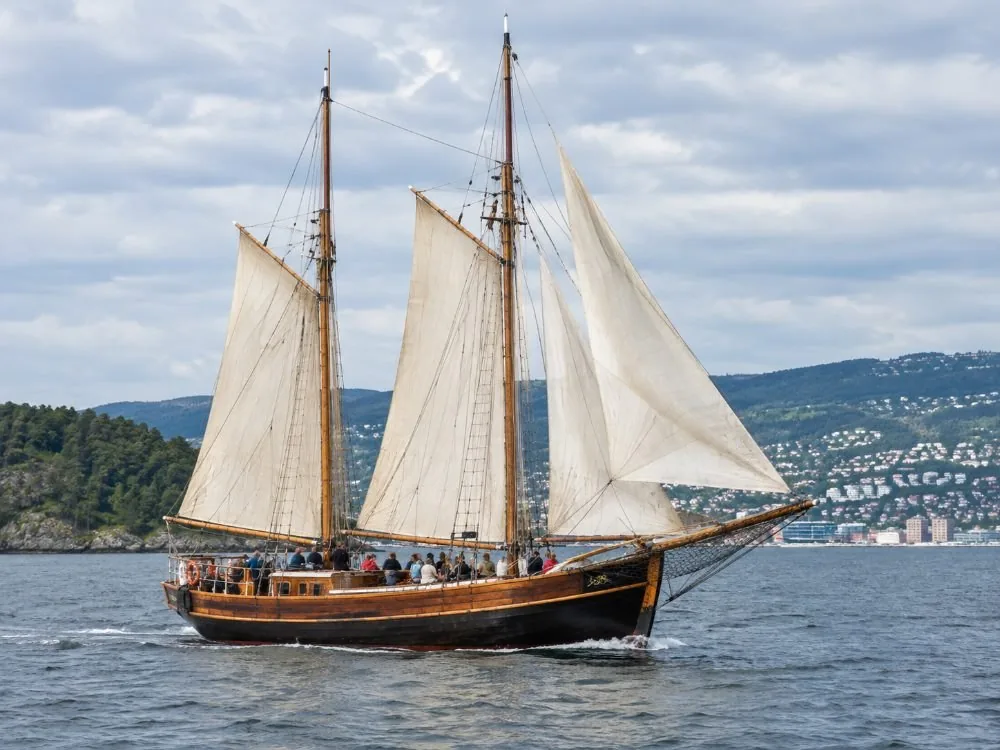 Wooden ship, no seat promised
Oslo: Fjord Sightseeing Cruise on a Traditional Wooden Sailing Ship
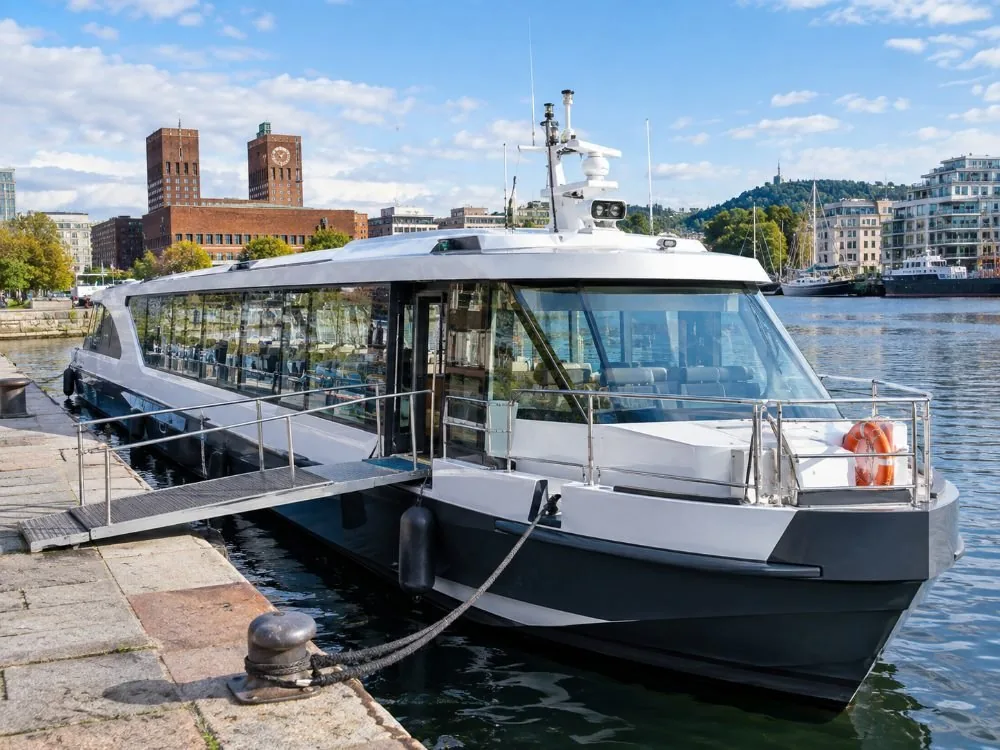 Step-free, with a lift
Oslo: 2-Hour Electric Oslofjord Sightseeing with Audio Guide
What passengers wrote
One per boat, from the operators’ own GetYourGuide listings. The ratings run from 4.4 to 4.7 on samples between about 158 reviews and about 6,690, which is not a ranking however much it looks like one.
A large, clean boat and a peaceful, quiet cruise, with beautiful scenery.
You see the city from a different angle, and how tied to the water it is.
Pleasant and calm. The ship really was silent.
Battery-powered, warm inside, and it even has a lift.
The sea was calm, and for fifty minutes it packs a lot of sights in.
The guide flagged a difficult climb, so we walked back instead.
Ratings and reviews are the operators’ live GetYourGuide figures. Read our full tour reviews ›
Four questions I answered every day on the ticket booth
Six summers at Rådhusbrygge, mostly telling people that no, this is not the boat to Bygdøy, that is the next pier along.
Is this the fjord I have seen in photographs?
Almost certainly not, and it is better to know at the ticket window than at the rail. The pictures that sell Norway are Geirangerfjord and Nærøyfjord, and both are 300 to 450 km away on the western side of the country. The Oslofjord is about 120 km long from Færder to the innermost arm and it is a sill fjord in the Oslo Rift — a fault-controlled trough of Permian age that glaciers later deepened and reworked, which is a genuinely different landform from a gorge cut out of a mountain. What you get instead is a harbour with a fortress in it, a container port on one shore, museums on a wooded peninsula opposite, and islands with cabins on them. People who board expecting the postcard spend ninety minutes disappointed by something quite good. The two fjords, compared.
Which pier do I actually want?
Rådhusbrygge 2, 3 and 4 are in a row in front of the City Hall, and the walk between them takes under a minute, so mixing those three up costs you nothing worse than a jog. Langkaia is the one that catches people. It is over by the Opera House and Central Station on the Bjørvika side, about a kilometre from Rådhusbrygge 3, roughly a quarter of an hour on foot, and it is where the single most-reviewed cruise in Oslo departs from — 4.5 from about 6,690 reviews. There is history in why the three City Hall quays are arranged as they are: 2 was the Nesodden boats until 1986, 3 the Bygdøy boats, 4 the island boats, and 4 still is. That is why a sightseeing cruise and Ruter's public ferry to Hovedøya cast off from the same planks. Every departure point, in detail.
Should I just take the public ferry instead?
If what you want is to be on the fjord rather than to be told about it, yes, and this site earns nothing from saying so. Line B1 goes to Hovedøya, Lindøya, Gressholmen, Bleikøya and Nakholmen; line B2 adds Langøyene in summer; B10 crosses to Nesoddtangen in about 23 minutes; B21 and B22 reach Drøbak, weekends in spring and autumn and daily through summer. Ruter's own line is that you get to the islands on an ordinary Ruter ticket. What the ferry will not do is choose its route for what you can see, put a commentary in your ear, keep a window seat warm with a bar behind it, or promise to bring you back to where you started. It also has people on it carrying shopping home. The full comparison.
Which of the six, then?
Work down in this order: pier, then whether you want a person talking, then how long you can give it. If you only have an afternoon and your language is among the seven on the app, the Langkaia cruise at 4.5 from about 6,690 reviews does ninety minutes and you will not be cold. If you want questions answered, the silent boat from Rådhusbrygge 2 is the only city cruise with a live guide, in English, at 4.7 from about 2,079. If somebody in the party needs a lift on board, the electric boat from Rådhusbrygge 4 is the one that has it, and yes, at 4.4 from about 2,396 reviews it is the lowest-rated here — that is an unremarkable score for a boat carrying that many people, and it is still the right answer for a step-free day. If you want to land on islands, only the six-hour trip does that, and it is not wheelchair accessible, involves walking and climbing, and takes under-15s only with an adult. Best, answered properly.
Can’t make these dates?
Browse more available Oslofjord cruises and find one that fits your schedule — all with instant confirmation and free cancellation.
Oslofjord sightseeing cruises, explained
The Oslofjord runs about 120 km from Færder up to its innermost arm, reaches 160 m deep in the inner basins, and is held back by a threshold at Drøbaksundet only about 19 m deep. Six sightseeing boats work the top of it, from fifty minutes to six hours, leaving from four quays rather than one. I crossed this water on the B10 from Nesoddtangen to school for eleven years and spent six summers on the ticket booths at Rådhusbrygge, telling people in four languages that no, you cannot see the waterfalls from here.
A sill fjord, and the waterfalls are 300 km away
The image most people arrive with is Geiranger: a mile-deep cut with waterfalls down vertical rock. Geirangerfjord and Nærøyfjord are 300 to 450 km away, on the other side of the country. This is a different landform. It lies in the Oslo Rift, a fault trough of Permian age that the ice reworked rather than carved from nothing; Britannica calls it a glacier-formed depression, or graben, partially filled and partially reexcavated, and Store norske leksikon files it as a terskelfjord. The shallow lip at Drøbak does real work: the basins behind it exchange their water slowly, which is why NIVA has spent decades documenting the renewal cycle in Bunnefjorden. The internet line that the Oslofjord is not a fjord is simply wrong. It is a sill fjord, not a gorge. The distinction, in full.
What a boat out of central Oslo shows you instead is a capital’s harbour, and better than that sounds: Akershus Fortress on the headland, the Opera House across Bjørvika, the wooded museum peninsula of Bygdøy, Dyna lighthouse on a bare skerry, then the near islands with their painted cabins. Working traffic runs through it: the Kiel ferry out of Hjortnes, the Copenhagen ship off Vippetangen, container cranes at Sjursøya. Landmark by landmark.
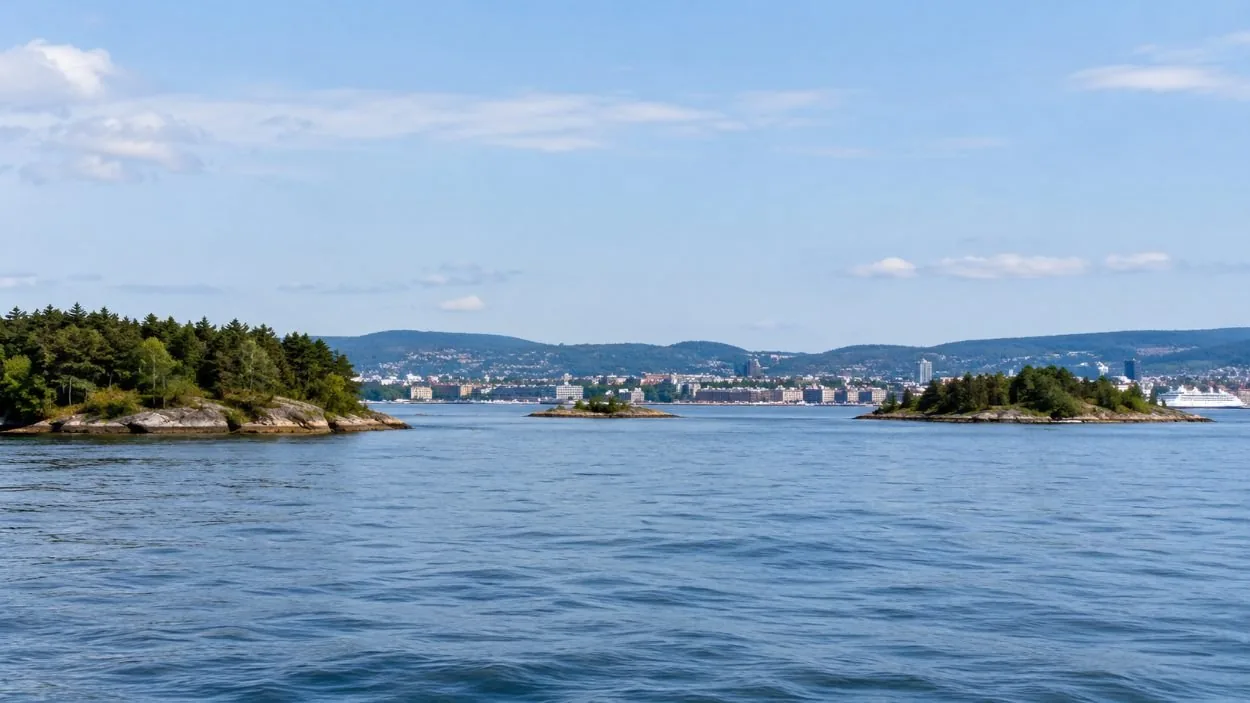
Six listings, four quays, fewer companies than it looks
Sorted by operator, the catalogue looks like a market. It is not. Rådhusbrygge 2, 3 and 4 stand in a row in front of the City Hall, a minute apart, and most of this fleet ties up along them. The two-hour wooden sailing ship and the fifty-minute wooden loop both go from Rådhusbrygge 3, same operator, same hulls; the two-hour one has blankets and a bar, and does not guarantee you a seat — boarding is open, so arrive early. The fifty-minute loop is a taster and says so. Rådhusbrygge 4, the island boats’ quay, sends out two more: the lowest-rated boat here, and the only one that lands. Rådhusbrygge 2 sends out the silent hybrid-electric boat, and it is the only city cruise here with a live guide, in English only, at 4.7 from about 2,079 reviews.
Then the one that catches people. The most-reviewed cruise in Oslo, 4.5 from about 6,690 reviews, does not leave from the City Hall quays at all. It leaves from Langkaia, by the Opera House and Central Station, about a kilometre east, a quarter of an hour on foot. Every summer I sent people running for it. So the variables are the quay, the hull, the clock, who is talking and in which language, and whether you get off anywhere — and only the six-hour trip does that last one, landing on five islands and walking them, which is why it is not wheelchair accessible, involves walking and climbing, and takes under-15s only with an adult. Its 4.5 rests on about 158 reviews. Every pier, and the six side by side.
One more, said plainly rather than buried: the two-hour electric boat from Rådhusbrygge 4 is the lowest-rated of the six, 4.4 from about 2,396 reviews. Across that many passengers 4.4 is an ordinary number for a high-volume operation, not a warning, and that boat is the only one here with a lift on board. If somebody in your party needs step-free access between decks, the weakest score is the right answer. What each listing states.
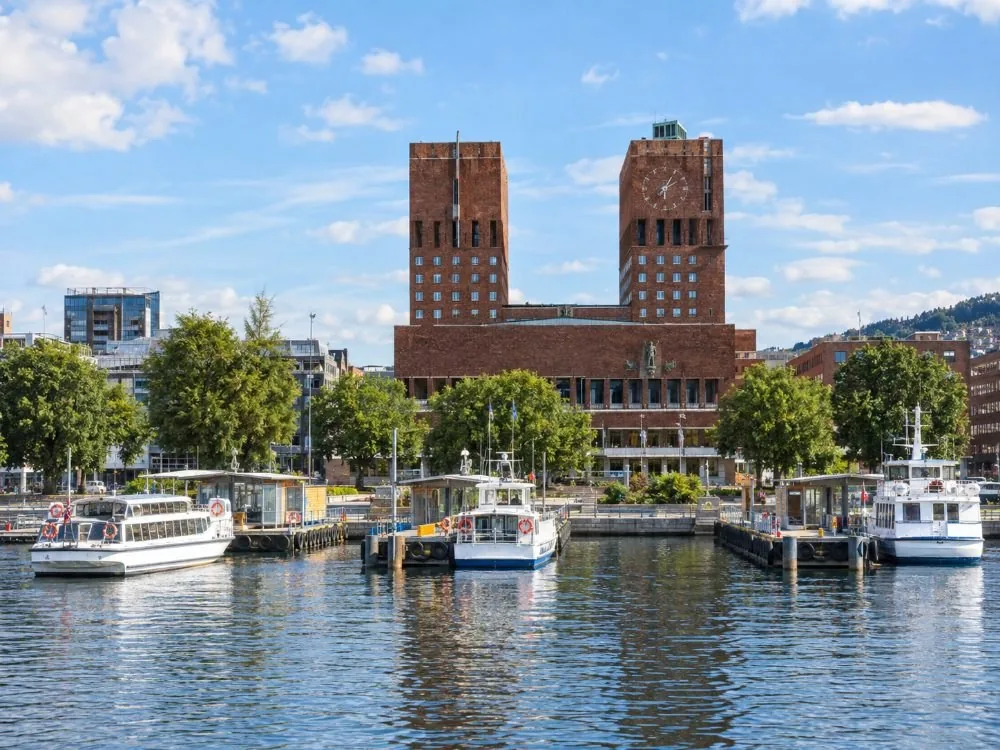
Part of it is already on your transit ticket
Rådhusbrygge 4 has been the island boats’ quay since long before any of this was sold as sightseeing. Ruter’s line B1 “Øyene” runs from there to Hovedøya, Lindøya, Gressholmen, Bleikøya and Nakholmen; line B2 adds Langøyene in summer. Ruter’s own words are that you reach the islands on en helt vanlig Ruter-billett, a perfectly ordinary Ruter ticket. B10 crosses to Nesoddtangen in about 23 minutes. B21 and B22 reach Drøbak, weekends in spring and autumn, daily through summer. If what you want is to be on the fjord rather than to be told about it, the public boat does that on the ticket already in your pocket, and this page earns nothing by telling you.
What a cruise gives you that the ferry does not is a route chosen for what you can see rather than for who needs to get home, a commentary, a heated saloon with a bar, and a guaranteed return to the quay you left from. Nobody on it is carrying shopping. The comparison in full.
The water you are looking at is in trouble
Cod fishing has been banned in the Oslofjord since 2019, indefinitely since January 2023 — commercial and recreational alike, catch-and-release required, from Vestfold and Telemark to the Swedish border. From October 2025 recreational fishing was cut back to hand-held gear and shrimp traps banned outright. From January 2026 there are three nullfiskeområder where no fishing happens at all. Havforskningsinstituttet describes the cod stock as in decline and at a historically low level, and reports basins where the oxygen in the bottom water falls so far that everything living in it dies. You will not see that from a saloon window. It is under the hull the whole way. The fjord’s health.
Frequently asked questions
Where do Oslofjord cruises leave from?
From four quays, which is the fact this whole site is built on. Rådhusbrygge 2, 3 and 4 stand in a row in front of Oslo City Hall, a minute apart: the silent boat with the live English guide goes from 2, the two wooden ships from 3, the electric boat with the lift from 4, and the six-hour island trip — not wheelchair accessible, with walking and climbing, and under-15s accompanied — from the 4 area. The fourth quay is Langkaia, over by the Opera House and Central Station on the Bjørvika side, about a kilometre east and roughly a quarter of an hour on foot — and that is where the most-reviewed cruise in Oslo departs from, at 4.5 from about 6,690 reviews. Historically Rådhusbrygge 2 was the Nesodden boats until 1986, 3 the Bygdøy boats and 4 the island boats, which is why Ruter's public ferry still leaves from the same quay as a sightseeing cruise. Every pier, in detail, and how to reach each one.
What does an Oslofjord cruise cost?
There is no figure on this site, in any language, deliberately — the live number appears inside the booking widget, where it is actually current. What we can tell you is the shape of the question. Length moves it most: fifty minutes for the wooden taster from Rådhusbrygge 3, ninety for the Langkaia cruise, two hours for the live-guided silent boat from Rådhusbrygge 2 and for the electric boat from Rådhusbrygge 4 that is rated lowest of the six, six hours for the island trip that is not wheelchair accessible, involves walking and climbing, and takes under-15s only with an adult. A live guide costs more to put on a boat than an audio file. Food and drink are bought on board rather than bundled, except where a listing says otherwise, and the two-hour wooden sailing ship from Rådhusbrygge 3 includes a Bygdøy ferry ticket while promising no seat on itself. What actually drives it up or down.
Is the Oslofjord a real fjord?
Yes, and the confident version going round the internet is wrong. It is a sill fjord, a terskelfjord in Norwegian, lying in the Oslo Rift — a fault-controlled depression of Permian age that glaciers later worked on. Britannica describes it as occupying a glacier-formed depression, or graben, partially filled and partially reexcavated. So it qualifies under the sill-fjord definition, and it is not the same landform as a mile-deep glacially carved gorge. The threshold at Drøbaksundet is only about 19 m deep along narrows roughly 17 km long and about a kilometre wide, which is exactly what makes it a sill fjord: that shallow lip means the deep basins behind it, down to 160 m, exchange their water slowly. The definition, in full.
Can you see the Norwegian fjords from Oslo?
Not the ones you are thinking of. Geirangerfjord and Nærøyfjord are 300 to 450 km away on the other side of the country, and no boat leaving Oslo goes toward them. A cruise here shows you a capital city's harbour from the water: Akershus Fortress, the Opera House across Bjørvika, the Aker brygge and Tjuvholmen waterfront, the wooded Bygdøy peninsula, Dyna lighthouse on its skerry, and the low near islands with their painted summer cabins, with the Kiel ferry and the Sjursøya container terminal working alongside. That is worth ninety minutes on its own terms. It is not a substitute for the west. The honest comparison.
Can you reach the islands without booking a cruise?
Yes, and we would rather say so than let you find out afterwards. Ruter's line B1 “Øyene” calls at Hovedøya, Lindøya, Gressholmen, Bleikøya and Nakholmen, line B2 adds Langøyene in summer, and Ruter's own wording is that you get there on en helt vanlig Ruter-billett — a perfectly ordinary Ruter ticket, the same one that works on a tram. Line B10 crosses to Nesoddtangen in about 23 minutes; B21 and B22 reach Drøbak, weekends in spring and autumn and daily in summer. What the public boat does not give you is a route chosen for what you can see rather than for who needs to get home, a commentary, a heated saloon with a bar, or a guaranteed return to the quay you started from. Ferry or cruise, and what is on Hovedøya.
Which Oslofjord cruises are wheelchair accessible?
Three of the six are: the Langkaia cruise at 4.5 from about 6,690 reviews, the live-guided silent boat from Rådhusbrygge 2 at 4.7 from about 2,079, and the electric boat from Rådhusbrygge 4 at 4.4 from about 2,396. That last one is the lowest-rated of the six and also the only boat here with a lift on board, heated and air-conditioned — a 4.4 across that many reviews is a normal score for a high-volume operation, and if somebody in your party needs step-free access between decks it is the boat that has it. The six-hour island trip is explicitly the opposite: not wheelchair accessible, walking and climbing on the islands, and under-15s must be accompanied. What every listing states.
Is there a ninety-minute fjord cruise from Oslo?
Yes, and it is the most-reviewed cruise in the city: an electric ship with a panoramic saloon and audio commentary through an app in seven languages, 4.5 from about 6,690 reviews. The thing to get right is where it goes from, because it is the one cruise here that does not use the City Hall quays — it leaves from Langkaia, by the Opera House and Central Station, about a kilometre east of Rådhusbrygge 3. If ninety minutes is more than you want, the fifty-minute wooden loop from Rådhusbrygge 3 is the only shorter option, and it is a taster rather than a fjord trip. What ninety minutes covers, and what fifty minutes really buys.
Do Oslofjord cruises run in winter?
They do, and winter changes the product more here than almost anywhere. At the winter solstice Oslo gets about 5 hours 53 minutes of daylight, sunrise around 09:15 and sunset around 15:10, so a midday departure is the whole of the usable light and an afternoon one is a night cruise. At midsummer the same city has roughly 18 hours 50 minutes of it, sunrise about 03:53 and sunset about 22:43. The wooden ships run through the year but are cancelled and refunded if the fjord ices over, and the water sits at a couple of degrees in late winter against high teens at the very peak of summer. Pick a heated saloon over an open deck in February and you will enjoy the same route considerably more. Cruising in the dark half of the year, and which month to pick.
Still have questions? Email us [email protected]